


Quick answer: to stay awake on a long flight, line your sleep up with your destination's clock, get light and move around when you need to be awake, drink water, and use caffeine in small amounts early in your "awake" window rather than one big dose. Stop caffeine about six hours before you plan to sleep at your destination so it doesn't keep you up when you land.
Should I stay awake or sleep on a long flight?
Follow your destination's time. If it is daytime where you are going, try to stay awake; if it is night there, try to sleep. Shifting your body clock on the plane makes the first day after landing much easier.
When should I have caffeine on a flight?
Early in the part of the flight when you want to be awake. Caffeine usually takes effect within about 15 to 45 minutes and can stay in your body for many hours (its half-life is often around 3 to 7 hours, and longer for some people). A large dose late in the flight can make it hard to sleep on your first night.
| Your situation | Caffeine plan |
|---|---|
| Landing in the morning, need to stay up all day | Small amounts after you wake on the plane and through the morning; stop by early afternoon local time |
| Landing in the evening, want to sleep soon after | Little or no caffeine in the last six hours of the flight |
| Overnight flight, need to sleep on board | Skip caffeine before and during the sleep part; have some after you wake |
| Driving after you land | Plan rest first; caffeine does not replace sleep |
How much caffeine is sensible?
The European Food Safety Authority considers up to 400 mg a day, and up to 200 mg at one time, safe for most healthy adults. Small, spread-out amounts are usually easier on sleep and on the stomach than one big coffee. People who are pregnant, breastfeeding or sensitive to caffeine should be more careful and follow their doctor's advice.
What else helps you stay awake on a plane?
- Light: open the window shade or use screen light when you want to be awake; use an eye mask when you want to sleep.
- Movement: walk the aisle and stretch every hour or two when it is safe to do so.
- Water: cabin air is dry, and feeling dehydrated can make tiredness worse.
- Go easy on alcohol: it can make you drowsy and disturb sleep quality.
- Light meals: heavy meals can make you sleepy.
What is the easiest caffeine to take on a plane?
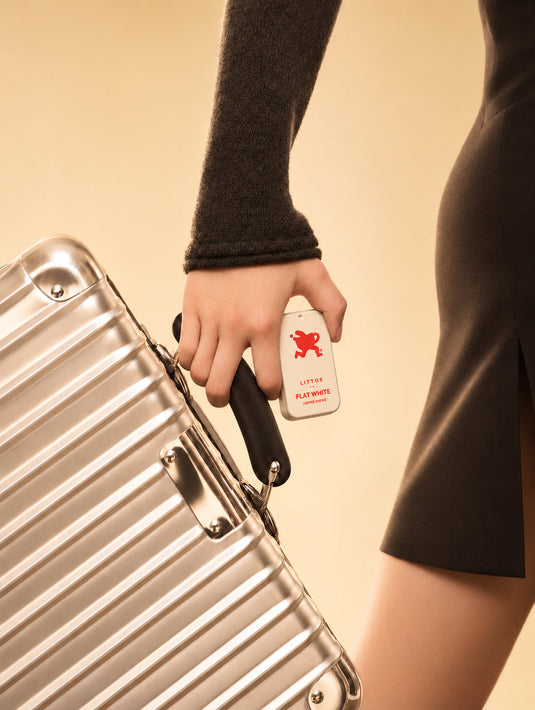
Cabin coffee comes at set times, and liquids over the limit cannot go through security. A solid option you can carry through security, like coffee chews, lets you choose your own timing and amount. Each Littos tin holds about 25 chews:
| Flavour | Per tin | Per chew |
|---|---|---|
| Choco Mocha, Caramel Macchiato | About 50 mg | About 2 mg |
| Flat White, Iced Mint Coffee | About 70 mg | About 2.8 mg |
| Double Espresso | About 140 mg | About 5.6 mg |
Because each chew is small, you can have one or two when you need a lift and stop when it is time to wind down. Airline and border food rules vary, so check them for your route.
FAQ
Does coffee make jet lag worse?
Caffeine at the wrong time can make it harder to sleep at your destination, which slows adjustment. Used early in your local daytime, it can help you stay awake until a normal bedtime.
Is it better to stay awake the whole flight?
Not always. Match your destination's time: sleep if it is night there, stay up if it is day.
Can I take coffee chews through airport security?
They are a solid food, so liquid limits do not apply. Some countries restrict bringing in food, so check before you travel.
Read more: Coffee Chews for Travel, Work and Commuting · How Many Coffee Chews a Day? · Shop Littos Coffee Chews